COMPLYING WITH EPA HFC RULES: SOFTWARE-BASED LEAK DETECTION FOR GROCERY AND COLD STORAGE
Updated: Jul 22

Key Takeaways
HFC refrigerants, when leaked, become potent greenhouse gases — compliance with EPA phase down rules requires active monitoring, not passive management.
Traditional sensor-based leak detection is complex, expensive, and requires ongoing hardware maintenance across multi-site fleets.
Software-based detection leverages data already flowing from existing refrigeration controllers — no new infrastructure required.
Grocery and cold storage operators can achieve full AIM Act compliance with Axiom's platform while also reducing energy costs and maintenance overhead.
Software-based refrigerant leak detection satisfies EPA HFC compliance requirements without sensor hardware — see our guide to how it works.
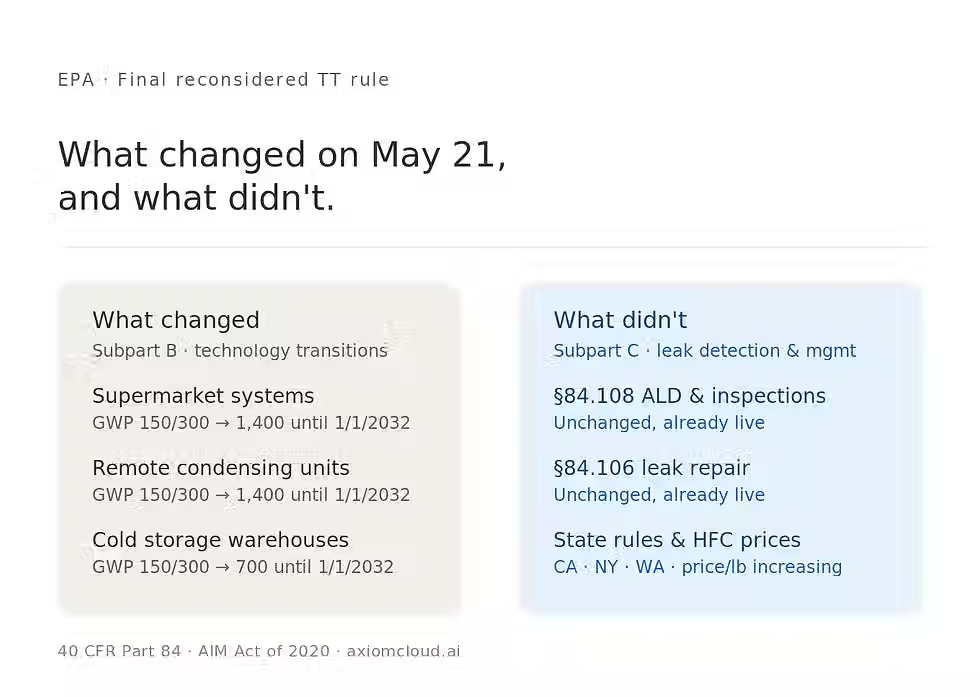
California operators must also satisfy the California refrigerant management program — stricter than the federal AIM Act on repair timelines, inspection frequency, and record keeping.
📊 Stat: The EPA's AIM Act phase down will reduce HFC availability by 40% by 2024 and 85% by 2036 — making leak detection and refrigerant conservation critical for grocery operators managing large refrigerant-charged fleets.
Why Is Software-Based Refrigerant Leak Detection Better Than Manual Spot Checks?
For grocery and cold storage operators, the advanced refrigeration systems that keep your products fresh and frozen are essential to your business success. However, many of these systems still employ hydrofluorocarbon (HFC) refrigerants, which, when leaked, become potent and harmful greenhouse gases. With the EPA's upcoming regulations phasing out high-global warming potential HFCs, proper monitoring and maintenance of refrigeration equipment to prevent leaks will be critical.
Traditionally, manual leak checks have been the default industry approach. However, sending technicians to periodically inspect equipment is time-consuming, disruptive, and prone to missing issues between visits. Once a leak is discovered, locating the exact source is tedious without advanced technology – not to mention the costs of technician time and lost refrigerant quickly add up.
Automated refrigerant leak detection software provides a better solution without the hassle and expenses of deploying physical hardware sensors across your facilities. Platforms like Axiom Cloud use proprietary artificial intelligence algorithms to constantly analyze your existing operating data. By detecting abnormal trends and deviations, the software identifies potential refrigerant leaks faster and more reliably than any technician performing occasional inspections.
How Does Axiom Cloud's Approach Provide Both Compliance and Operational Benefits?
Axiom Cloud's software-based approach has been proven over hundreds of real-world refrigeration installations ranging from small convenience stores to large cold storage warehouses. Rigorous testing showed over 90% accuracy in identifying real refrigerant leaks across all common equipment types and sizes. This demonstrates the software's effectiveness for grocery, cold storage, and other operators using commercial refrigeration.
Rather than periodic manual checks, Axiom Cloud's solution monitors your system trends 24/7 to pinpoint anomalies before significant emissions or damages occur. The software flags issues early when they are smaller and simpler to repair - and before they trigger alarms or risk component failures. Once a potential leak is detected, the platform's AI capabilities even determine the likely location and source of the leak, speeding mitigation.
Importantly, integrating Axiom Cloud's software requires no costly sensor hardware deployments. It extracts insights solely from digitized operating data already available from your existing building automation, HVAC, and refrigeration control systems. The technology works by learning normal patterns for your equipment and then alerting you on deviations. This software-based approach makes setup fast and affordable.
Why Should Grocery and Cold Storage Operators Adopt Innovative ALD Solutions Now?
For grocery and cold storage experts, adopting innovative leak detection software provides numerous advantages in light of impending HFC regulations:
Faster leak identification without relying on manual inspections
Continuous 24/7 system monitoring to identify leaks before alarms are triggered
Greatly reduced HFC emissions through early detection
Minimized refrigerant loss, energy waste, repairs, and downtime resulting in lower expenses
Improved regulatory compliance to avoid EPA fines and penalties
Reduced business risk and environmental impact
Increased refrigeration system uptime and efficiency
In addition to enhancing operations and compliance, Axiom Cloud's solution is available through a simple subscription model –avoiding significant upfront capital expenditures and in many cases, the need for expensive and ineffective manual leak checks.
As the EPA's HFC phaseout regulations loom, modern AI-powered software tools like Axiom Cloud's monitoring platform offer grocery, cold storage, and other operators an efficient path to compliance. Adopting new leak detection strategies now presents an opportunity for grocery and cold storage operators to reduce risks, improve profitability, minimize environmental impact, and demonstrate stewardship today, instead of scrambling to meet new federal and state compliance requirements. Contact Axiom Cloud today to learn more about future-proofing your refrigeration systems.

Joel Sharrer, JD/MBA
As Axiom Cloud’s in-house policy expert, Joel spearhead’s Axiom Cloud’s strategic responses to, and adoption of, new environmental regulations. Joel is passionate about developing software solutions for global climate challenges, and brings over a decade of environmental policy expertise - having worked on environmental issues for law firms, energy consultancies, and global technology providers.


Comments