HOW GROCERY STORES CAN MEET LOOMING CLIMATE REGULATIONS
Updated: Jul 22
Properly operating freezer and refrigeration systems are the consumer’s guarantee of safely preserved perishable food items with the longest shelf life possible.
What is the most cost-effective path for a grocery chain to meet both energy and refrigerant compliance requirements simultaneously?

While some signs point to shrinking inflation overall, food costs are still up by more than 25% since 2019, with families even going into debt to pay for groceries.
Over the last 15 years, hourly workers have suffered a loss of almost $26,000 per year in buying power, according to the ALICE Essentials Index. While the effect on wealthier Americans is negligible, this has really hurt moderate and low-income families.
All of this has had a deeply troubling impact on large supermarket chains who are seeing shoppers adjust their grocery budgets to focus on necessities. These changes in buying behaviors are impacting grocery chains, big-box stores, independent grocers, and corner "bodegas;" all are suffering from perilously thin margins, only 1.6% on average in 2023.
How do the AIM Act's HFC phase down and Subpart C leak detection requirements work together for grocery retailers?
These expenses are significant. In fact, a typical grocery store spends more to power and maintain its refrigeration systems than it takes home in profit each month. Refrigeration is often managed inefficiently using manual processes, without the benefit of data or information. While retailers have only so much control over consumer behavior, they can integrate technologies that support their bottom line by reducing operating expenses.
In addition to electricity costs related to refrigeration, the refrigerants themselves are a hefty budget item, with costs of HFC refrigerants having risen 200% over the past 3 years. Not only that, but American grocery stores tend to leak about 25% of their refrigerant each year.
Why Does Indirect ALD Deliver Sustainability Benefits Beyond Just Regulatory Compliance?
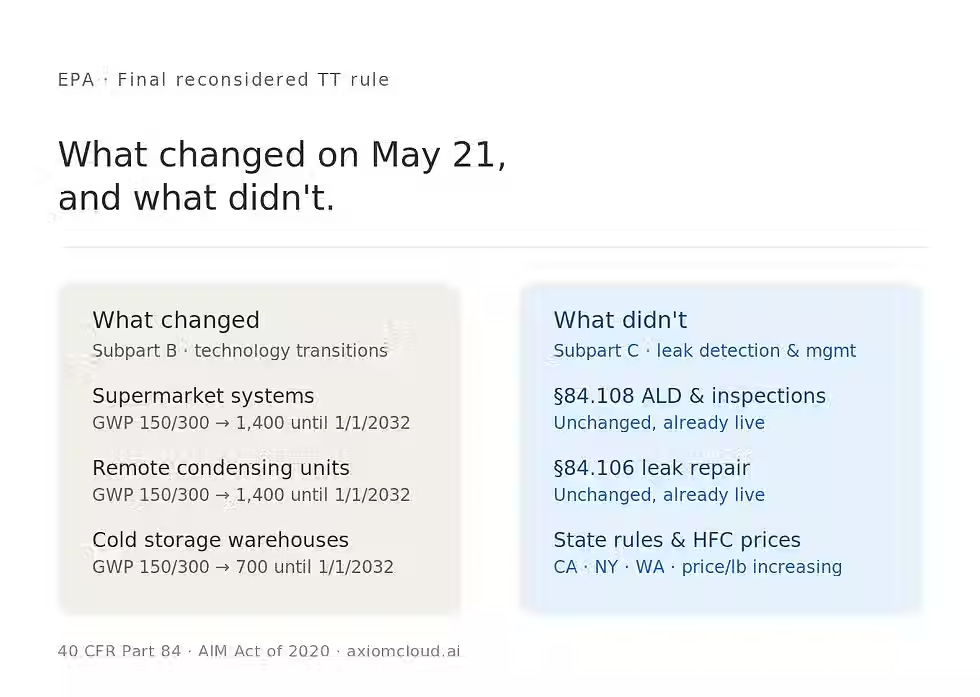
Beyond the efficiency benefits, there's another substantial reason to adopt this transformative technology: new federal regulations on HFC refrigerants. In 2020, Congress enacted the American Innovation Manufacturing (AIM) Act, which authorized the EPA to phase down HFC refrigerants, maximize reclamation, and facilitate the transition to next-generation technologies. The rules aim to phase out HFCs to reach an 85% reduction by 2036. Complying with these regulations will be challenging and expensive, both in terms of fines levied by the EPA and mandated retrofitting costs.
📊 Stat: HFC refrigerants in commercial use have GWPs ranging from 675 (R-134a) to 3,922 (R-404A). The AIM Act phases down HFC production by 85% by 2036. Proactive leak reduction cuts both compliance risk and future refrigerant costs as HFC prices continue rising due to phasedown-driven scarcity. (Source: EPA)
Properly operating freezer and refrigeration systems are the consumer’s guarantee of safely preserved perishable food items with the longest shelf life possible. For stores, it’s never been more important to adopting predictive maintenance rather than reactive repairs to avoid operating emergencies, minimizing electricity costs, and increasing customer satisfaction during a time of sustained and frustrating inflation. Artificial intelligence (AI)-enhanced technology solutions are key to unlocking these benefits.

Comments