NO MIDDLE GROUND: THE IMPORTANCE OF POWER MANAGEMENT SOLUTIONS FOR SUPERMARKETS
Updated: Jul 22
Key Takeaways
For 20 years, supermarkets focused on reducing energy (kWh) consumption — but demand charges (kW) now drive 60-70% of electricity costs.
Managing power demand, not just energy consumption, is the new imperative for supermarket financial performance.
Traditional energy conservation measures are reaching diminishing returns — active power management is the next frontier for cost reduction.
Axiom's demand management tools address the kW dimension of the electricity bill that most energy efficiency programs ignore.
📊 Stat: Energy is typically the third-largest expense for supermarkets after labor and inventory, with demand charges alone representing up to 50% of the monthly electricity bill. (ENERGY STAR Commercial Food Service Report)
Why Is Power Management Critical for Supermarkets Facing Rising Energy Costs?
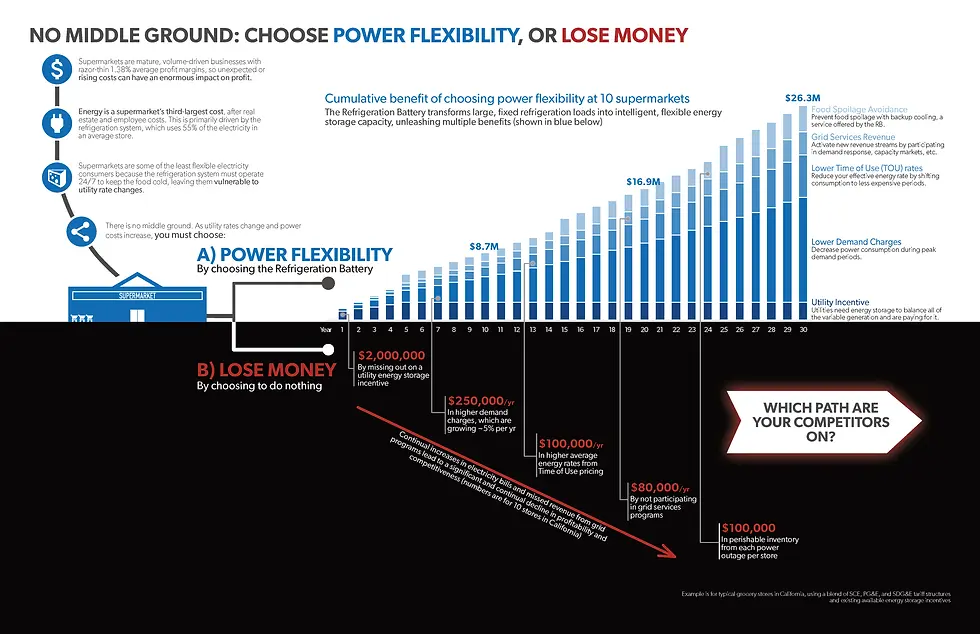
Energy is a supermarket’s third-largest cost, after real estate and employee costs. This is primarily driven by the refrigeration system, which uses 55% of the electricity in an average store.
For the last 20 years, supermarket managers have emphasized reducing energy (kWh) consumption of their stores. This is no longer enough. Today, supermarket owners must focus on managing power (kW), which drives 60-70% of their electricity bill.
How Do Demand Charges Make Power Management Particularly Challenging for Grocery Retailers?
Power directly affects Demand Charges and has a significant impact on the average Time of Use (TOU) energy charges paid by supermarkets. Demand charges have been increasing at an average rate of 5% per year in California and are growing all around the country, as highlighted in a recent NREL report. Now, when supermarkets consume energy can be more significant than how much they consume.
This is particularly challenging because supermarkets are some of the least flexible electricity consumers because the refrigeration systems must operate 24/7 to keep the food cold, leaving them vulnerable to utility rate trends and changes.
Why Does Smart Energy Storage Offer Supermarkets the Best Path to Controlling Utility Costs?
However, the situation is not all doom and gloom. Supermarkets have a golden opportunity to turn their energy intensive, inflexible refrigeration systems into intelligent energy storage assets. The Refrigeration Battery, which Axiom offers as a turnkey managed service, can save money for supermarkets today while also hedging against future utility rate changes.
We put together an infographic to demonstrate the immediate and long term benefits of employing the Refrigeration Battery platform on a fleet of 10 supermarkets. But by quantifying the upside of this service, we must also highlight the downside of choosing to do nothing. This is why we say that there is ‘no middle ground’ - stores must either choose to adapt to a flexible load profile, or choose to do nothing and suffer the financial impacts.
If you’re interested in learning how to optimize your grocery store or refrigerated warehouse with Axiom Cloud’s IoT Platform, contact us today.


Comments